How Does Water Softener Salt Work

Last week, my neighbor Carol called me in a panic. She said her dishwasher had started leaving a weird, filmy residue on her glasses—like a ghost had wiped them with a lollipo...

Last week, my neighbor Carol called me in a panic. She said her dishwasher had started leaving a weird, filmy residue on her glasses—like a ghost had wiped them with a lollipop. “It’s the water,” she groaned, and I could practically hear her rolling her eyes through the phone.
That’s how most of us meet the concept of hard water: through a bad cup of coffee or a shower that leaves your skin feeling like dry sandpaper. You start googling, and suddenly you’re staring at a bag of water softener salt, wondering if you’re supposed to cook with it or sacrifice it to the plumbing gods. Spoiler alert: it’s neither.
The Secret Life of Hard Water
First, let’s get the villain straight. Hard water is basically regular H₂O that’s been hanging out with too many calcium and magnesium minerals underground. It’s the guy at the party who won’t stop bragging about his rock collection—annoying, but not dangerous.
Must Read
Those minerals love to cling to everything: your pipes, your coffee maker, your hair. They create scale buildup that kills appliances and makes soap form that scummy curd instead of a nice lather. Lovely, right? (Side note: if your soap feels slimy instead of foamy, that’s hard water cheating you out of a proper scrub.)
Enter the Salt: The Big Swap
This is where the salt steps in, but not the kind you sprinkle on french fries. Water softener salt is usually sodium chloride or potassium chloride in big, chunky pellets or blocks. It doesn’t “clean” the water—that would be too simple. Instead, it performs a sneaky chemical switcheroo.
Inside your water softener is a tank full of resin beads—tiny, negatively charged plastic beads that are like magnets for positive ions. When hard water flows through, those calcium and magnesium ions shout “Dibs!” and latch onto the beads. But the beads are already coated with sodium ions from the salt.
Here’s the magic: the resin beads prefer the hardness minerals over the sodium. So they release the sodium ions into the water and grab the calcium/magnesium instead. You get soft water (with a tiny bit of sodium), and the beads get full of the bad stuff. Talk about a fair trade—you lose the scale, but gain slightly salty water? It’s a deal.
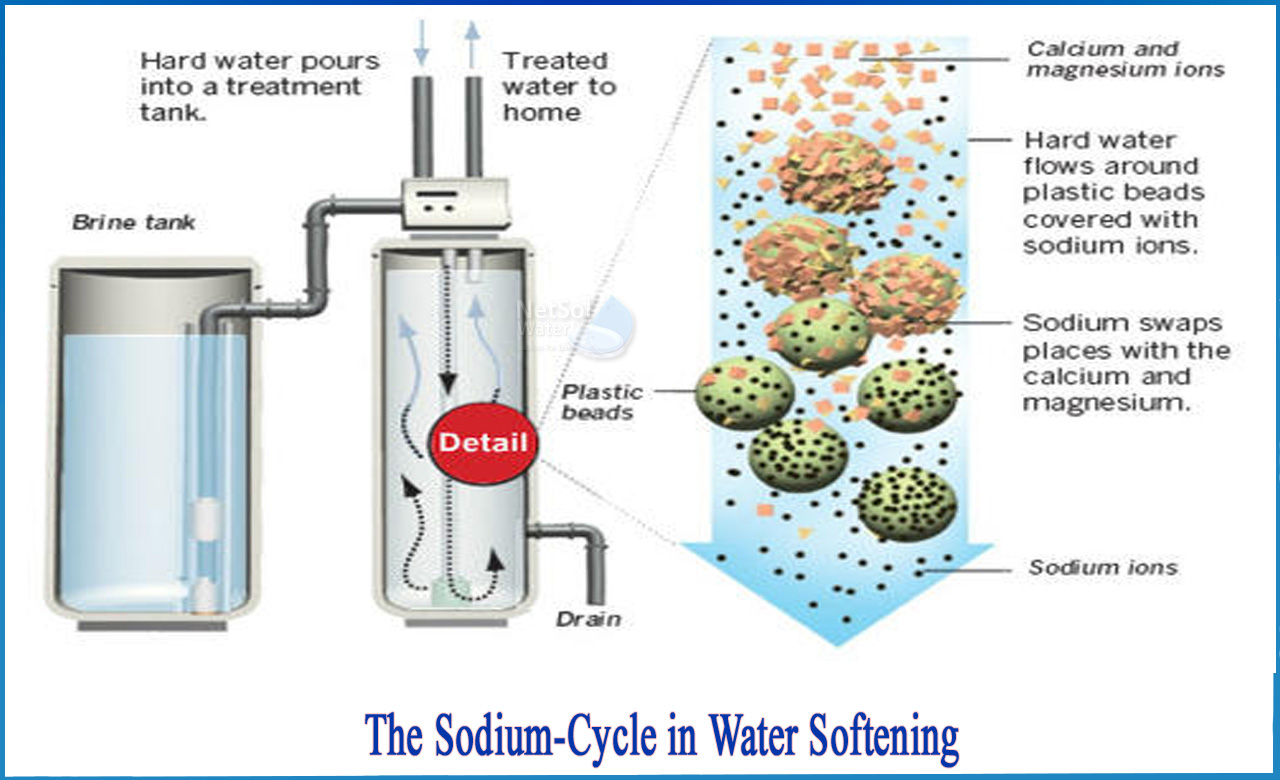 How Water Softeners Work Diagram Water Softener: Plumbing Water
The Regeneration Cycle: Salt’s Second Act
But wait—if the beads are now covered in calcium, they can’t keep swapping. They’d get “full” after a few hundred gallons. That’s when the salt does its real heavy lifting.
The system flushes a brine solution (super salty water) through the resin tank. The high concentration of sodium ions literally kicks off the calcium and magnesium from the beads. Think of it like a game of musical chairs where the sodium ions yell, “Move over, we’re sitting here now!”
The flushed-out hard minerals go down the drain, and the beads are “recharged” and ready to soften again. That’s why you have to refill the salt bin every few weeks—you’re feeding the system its secret weapon. (Pro tip: don’t use table salt; the tiny grains can clog everything. Use pellets or crystals made for softeners.)
But Isn’t Salted Water Bad for Me?
I hear you—salt in water sounds like a recipe for high blood pressure. Relax. The amount of sodium added is tiny, usually about 7.5 to 20 milligrams per glass of water. To put that in perspective, a slice of bread has about 100 milligrams. You’d have to drink the ocean to get worried.
 Salt Water Softener System Diagram Water Softeners Why? Service
If you’re still nervous, you can use potassium chloride salt instead. It’s more expensive, but it adds potassium (which is actually good for you) instead of sodium. Your plants might even thank you.
The real irony? The salt itself never actually touches your drinking water. It only interacts with the resin beads during regeneration. The water you drink has already been swapped and filtered. So no, your morning coffee won’t taste like the Dead Sea.
The Bottom Line: Why Bother?
Soft water doesn’t just save your appliances—it saves your sanity. No more scrubbing white spots off your faucets. Your shampoo will actually lather. Your laundry won’t feel like cardboard. And Carol’s glasses? Crystal clear again.
So the next time you dump a bag of those chunky pellets into your brine tank, give it a little nod. It’s doing the gritty job so your dishes don’t have to. And honestly, isn’t that the dream? Letting a rock do the dirty work.
