Who Is Most At Risk From Salmonella? Know The Warning Signs Of Severe Illness

Meet the Usual Suspects Salmonella isn’t picky—it’ll knock on any door it can find, from your grandma’s chicken pot pie to that mysterious “exotic” salad you spotted at the...
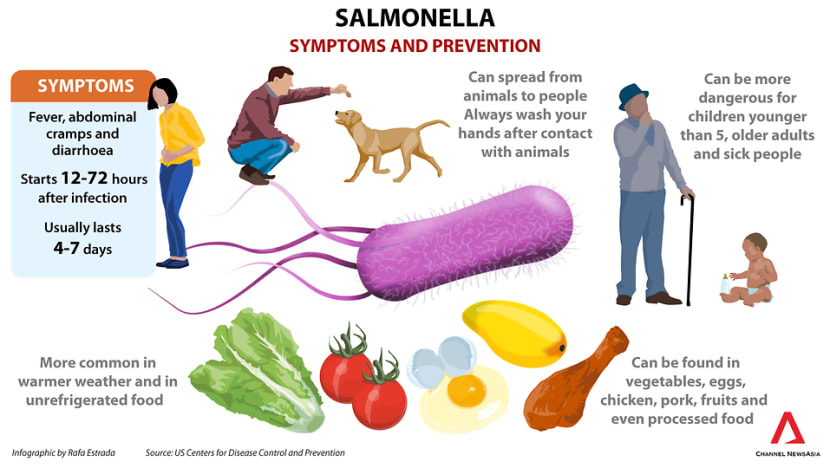
Meet the Usual Suspects
Salmonella isn’t picky—it’ll knock on any door it can find, from your grandma’s chicken pot pie to that mysterious “exotic” salad you spotted at the farmer’s market. Kids and elderly folks are the ones who usually end up on the front page of the “Who Got Sick?” list.
Why? Their immune systems can be a bit like a sitcom cast—some members are over‑dramatic, others are under‑prepared. When the bacteria barges in, they’re often the first to hear the “boo!”
And don’t forget the “adventure chefs” who think a quick microwave is the same as a culinary masterclass. They’re at risk, too.
Must Read
Kids: The Tiny Tornadoes
Children under five love to explore everything with their mouths—yes, even the slime from that science project. That curiosity turns their stomachs into a VIP lounge for germs if the food isn’t handled right.
Plus, their tiny bodies have less “buffer” against the toxin. A spoonful of undercooked chicken can feel like a fireworks show—only the fireworks are inside their intestines.
Grandparents and the Golden Years
Older adults often have weaker immune defenses, and many take medications that can blunt the gut’s natural defenses. Add a dash of “I’m not cooking that much anymore” and you’ve got a perfect storm.
They might also be the ones who trust a “hand‑made” mayonnaise in the fridge for a week because “it looks fine.” Spoiler: it’s not fine.
The “Healthy Adult” Illusion
Think you’re invincible because you jogged three miles and ate kale? Think again.
The average 30‑year‑old who skips the cooking classes in favor of “take‑out Tuesdays” can still fall victim to a salmonella surprise, especially when they’re too busy scrolling memes to check expiration dates.
Spot the Sneaky Symptoms
Salmonella’s first act is a classic case of “you’ll feel a little off.” That usually means nausea, vomiting, and a sudden urge to sprint to the bathroom.
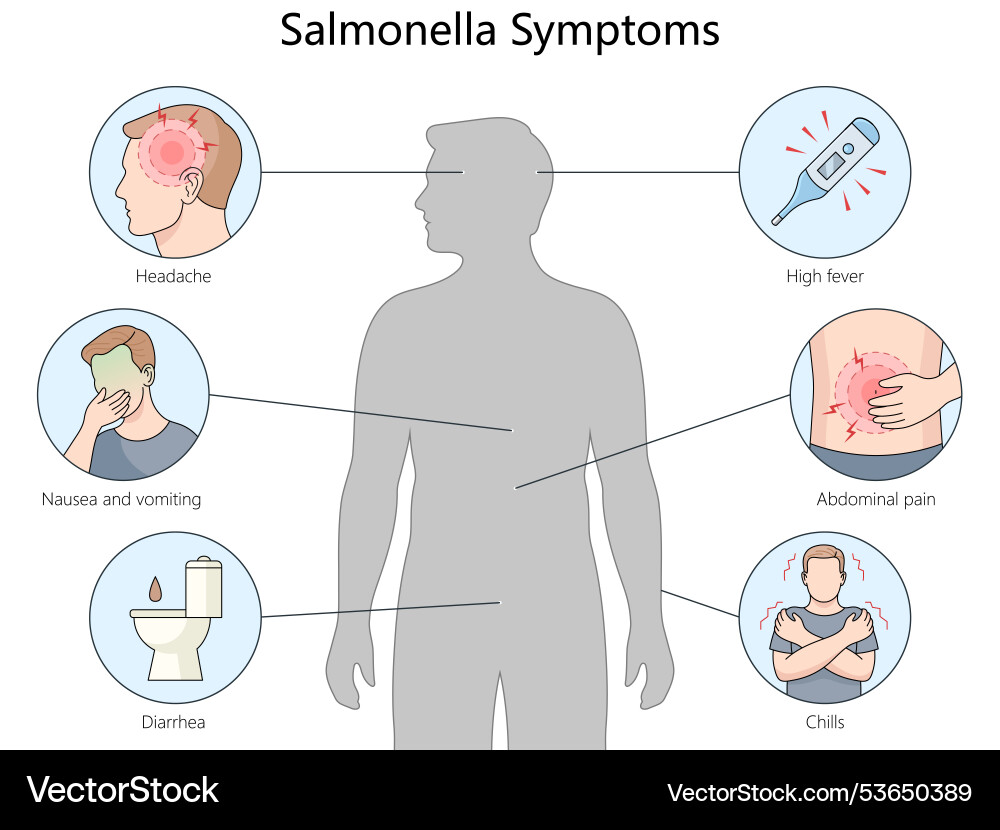 Salmonella symptoms with common indicators Vector Image
If you’re wondering whether you’ve got a stomach flu or a bacteria party, the key is the timeline: symptoms pop up 6 to 72 hours after the questionable bite.
When the Bathroom Becomes a Theme Park
Frequent trips to the loo, watery poops, and urgency that feels like a race against a ticking clock are hallmark signs. If you’re swimming in porcelain, you’re probably dealing with more than a mild upset.
Don’t try to “hold it in” for drama points; dehydration can sneak up faster than your Wi‑Fi drops during a Zoom call.
Fever: Your Body’s Passive‑Aggressive Alarm
A temperature climbing above 100.4°F (38°C) is your body shouting, “Hey, we’ve got uninvited guests!” It’s the most over‑the‑top way to tell you to call a doctor.
If you’re feeling hot enough to melt a snowman, get a thermometer and start taking notes.
Other Red Flags
Severe abdominal cramps that feel like a jackhammer, blood in the stool, or a “I can’t keep any food down” vibe are warning signs that the infection is taking the lead role.
When these happen, it’s time to quit playing “guess the illness” and dial up professional help.
When to Call in the Docs
If you, your kid, or grandma are experiencing persistent vomiting for more than 24 hours, that’s a call to the doctor—no ifs, ands, or buts.
 Salmonella (Salmonellosis): Causes, Symptoms & Complications - Mayo
Also, if dehydration symptoms appear—dry mouth, dizziness, or feeling like the Sahara desert inside—you need a medical check‑up, stat.
High‑risk groups (the kids, the elderly, pregnant women) should call the doctor even if the symptoms seem “mild.” Better safe than sorry.
Surprising Facts to Wow Your Friends
Did you know the average salmonella bacterium can survive in a refrigerator for up to a four‑month marathon? That’s longer than most Netflix series run.
Even more surprising: a single egg can hold up to 10,000 salmonella cells and still look perfectly normal. It’s the culinary equivalent of a wolf in sheep’s clothing.
And here’s a kicker—reheating leftover pizza at the “just warm enough” stage won’t kill the bacteria. You need to hit at least 165°F (74°C) to give salmonella the boot.
Quick Prevention Cheat Sheet
Wash your hands like you’re auditioning for a hand‑washing commercial. Soap, water, 20 seconds—no shortcuts.
Cook poultry to an internal 165°F. Use a meat thermometer; it’s not a “guess‑the‑temperature” game.
 Urgent: Major Chocolate Products Pulled From Shelves Due to Salmonella
Separate raw meat from veggies like they’re rival fan clubs at a game. No cross‑contamination, no drama.
Refrigerator Rules
Store raw meat on the lowest shelf—this way any drips can’t ruin your fresh lettuce. Think of it as a “no‑spill zone.”
Don’t keep eggs out of the fridge longer than a Netflix binge; they’re better chilled.
When Eating Out
If the kitchen looks like a tornado walked through, trust your instincts and order a salad—well, a salad that’s been properly washed, of course.
And if the server’s smile looks a little too practiced, maybe double‑check that the food is actually cooked.
Wrapping It Up—The Takeaway
Salmonella loves to crash parties, especially where the food isn’t handled with love (or proper hygiene). Kids, seniors, and the “I’m too busy to cook” crowd are most likely to get the invite.
Know the warning signs: sudden tummy turmoil, fever, and bathroom marathons. When in doubt, call a professional before your story turns into a tragic comedy.
With a sprinkle of good kitchen habits and a dash of vigilance, you can keep salmonella out of your next dinner party—and keep the only drama you want on the TV screen.
